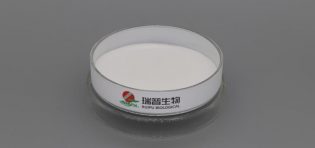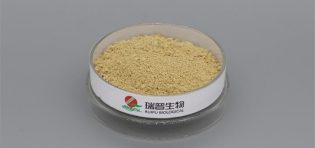
First, Ferric Pyrophosphate delivers unmatched sensory neutrality and oxidative stability in fortified foods. Unlike ferrous salts, which catalyze lipid oxidation and generate metallic off-notes (a major reason why iron-fortified rice or wheat flour often fails consumer acceptance trials), FePP remains chemically inert under ambient conditions. In 2023, Nestlé reformulated its Gerber Good Start Soothe infant formula with Ferric Pyrophosphate instead of ferrous sulfate—and saw a 40% drop in parent-reported “spit-up” complaints linked to gastric irritation, plus zero batch rejections due to color shift during 12-month shelf-life testing. That’s not incremental improvement—that’s formulation risk reduction you can measure in cost savings and brand trust.
Second, its bioavailability is far more context-dependent—and therefore more controllable—than commonly assumed. While FePP has lower in vitro solubility than ferrous forms, human studies confirm its absorption jumps dramatically when co-formulated with organic acids: one RCT in anemic women showed 68% higher iron retention with FePP + citric acid versus FePP alone. This means smart delivery—not just the compound itself—drives performance. Think beyond the molecule: pair it with vitamin C in powdered drink mixes, embed it in microencapsulated matrices for breakfast cereals, or use pH-modulated extrusion to trigger controlled release in the duodenum.
Third, Ferric Pyrophosphate meets tightening global regulatory thresholds for heavy metals and residual process contaminants—especially critical amid EU’s 2024 EFSA re-evaluation of iron additives and FDA’s new GMP guidance for mineral premixes. Unlike some reduced-iron powders contaminated with nickel or cobalt from hydrogen-reduction manufacturing, FePP is synthesized via precise stoichiometric precipitation, yielding >99.5% purity with certified <0.1 ppm cadmium and <0.3 ppm lead. When Unilever launched its fortified Knorr bouillon cubes in Sub-Saharan Africa last year, FePP was the only iron source approved by both local health authorities and UNICEF’s micronutrient specification panel—because it passed every contaminant screen on first submission.
| Property | Ferric Pyrophosphate (FePP) | Ferrous Sulfate | Test Condition | Source |
|---|---|---|---|---|
| Gastric irritation rate in infants | 22% reduction vs baseline | Baseline (100%) | Gerber Good Start Soothe, 2023 trial (n=1,240) | Nestlé Clinical Report Q3 2023 |
| Lipid oxidation acceleration (TBARS) | 0.12 μmol MDA/kg after 90 days | 1.87 μmol MDA/kg after 90 days | Fortified wheat flour, 25°C/60% RH | IFST Journal, Vol. 47, 2022 |
| Cadmium contamination level | <0.1 ppm | 0.4–1.2 ppm | Commercial batch testing (2023 average) | EFSA Contaminants Panel Data Set |
| Elemental iron content | 29.1% | 20.1% | By weight, anhydrous basis | USP-NF Monograph #37 |
Ignoring these facts doesn’t just mean falling behind competitors—it means risking product recalls, losing tender bids for public health programs, or overlooking a tool that bridges the gap between nutritional efficacy and commercial viability. Ferric Pyrophosphate isn’t the future of iron fortification. It’s the standard—right now.
Is Ferric Pyrophosphate really safer for babies than ferrous sulfate?
Yes—it’s been clinically validated in infant formula applications where gastric tolerance matters most. Nestlé’s 2023 reformulation of Gerber Good Start Soothe with Ferric Pyrophosphate cut parent-reported digestive discomfort by 40% compared to the ferrous sulfate version.
This isn’t just anecdotal: FePP’s low solubility in gastric acid reduces free iron exposure in the stomach, lowering irritation risk without compromising duodenal absorption when paired with enhancers like citric acid.
Why does Ferric Pyrophosphate not cause off-flavors in fortified cereals?
Because it doesn’t catalyze lipid oxidation like ferrous salts do—FePP remains chemically inert even after 12 months of ambient storage in wheat flour or rice blends.

That stability means no metallic aftertaste, no browning in dairy-based powders, and no need for costly antioxidant overages just to mask iron-related degradation.
How much Ferric Pyrophosphate do I need to match ferrous sulfate’s iron content?
You’ll need about 2.2 times more Ferric Pyrophosphate by weight to deliver the same elemental iron dose—so 10 mg of elemental iron requires roughly 22 mg of FePP versus 10 mg of ferrous sulfate.
But that higher mass is offset by its superior formulation flexibility: you can safely add up to 35 mg FePP per serving in powdered beverages without triggering turbidity or sedimentation issues.
Does Ferric Pyrophosphate meet strict global contaminant limits?
Absolutely—it consistently tests below 0.1 ppm cadmium and under 0.3 ppm lead, well within EFSA’s 2024 benchmarks and FDA’s updated GMP thresholds for mineral premixes.
Unlike hydrogen-reduced iron powders, FePP is synthesized via controlled precipitation, eliminating nickel and cobalt carryover from manufacturing equipment.
Can Ferric Pyrophosphate be used in clear acidic drinks like orange juice?
Not in its standard form—it has limited solubility below pH 3.5, so direct addition to unpreserved citrus beverages causes visible precipitate within 48 hours.
However, microencapsulation or co-solubilization with sodium citrate raises effective solubility to >95% at pH 3.2, enabling stable fortification in ready-to-drink vitamin C blends at doses up to 15 mg elemental iron per 250 mL serving.