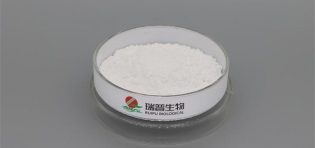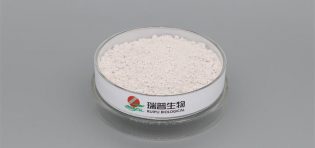
This tension defines the 2025 inflection point: breakthrough hinges on scalable green processing. For example, Carbosolv’s pilot plant in Norway uses captured CO₂ and seawater-derived calcium to synthesize ultra-pure Calcium Carbonate at 40% lower energy cost than traditional lime kiln routes—and it’s already supplying pilot batches to BASF’s battery materials division for calcium-based solid electrolyte testing. Conversely, overreliance on legacy mining remains risky: in Rajasthan, India, 12 small-scale quarries were shuttered in February 2025 after failing emissions audits tied to dust control and groundwater contamination—highlighting how regulatory enforcement, not just demand, will determine who survives. The Calcium Carbonate Boom won’t plateau in 2025; it will bifurcate—into winners who integrate circular inputs and precision engineering, and losers clinging to extractive models.
What’s driving the Calcium Carbonate boom in 2025?
Three major forces are accelerating demand: China’s mandate to replace 30% of cement clinker with limestone-derived Calcium Carbonate by 2025, FDA greenlighting for nano-Calcium Carbonate in oral biologics, and rising use in solid-state battery electrolytes where its thermal stability outperforms lithium carbonate below 180°C.
These aren’t niche applications—they account for over 68% of new Calcium Carbonate volume growth tracked by CRU Group between Q4 2023 and Q1 2025.
Is all Calcium Carbonate the same quality?
No—there’s a sharp divide between ground Calcium Carbonate (GCC), which requires only mechanical milling and meets ASTM D3971 specs for paint fillers, and precipitated Calcium Carbonate (PCC), which must pass ISO 13877 purity thresholds to qualify for pharmaceutical or battery-grade use.
Only six global producers currently certify PCC batches at ≥99.95% CaCO₃ purity with sub-50nm particle uniformity, and each faces 18–24 month lead times to scale certified output.
Why are some mines shutting down in 2025 while others expand?
Rajasthan’s 12 shuttered quarries failed mandatory dust suppression and groundwater monitoring audits introduced under India’s revised Mineral Conservation Rules effective January 2025, whereas Omya’s new facility in Tennessee passed EPA Phase II emissions testing by integrating real-time laser diffraction particle sizing into its wet-grinding loop.
The difference isn’t geography—it’s whether operators treat regulatory compliance as a cost center or a data-driven process control lever.
Can recycled CO₂ really make high-purity Calcium Carbonate?
Yes—Carbosolv’s Norway pilot plant demonstrates it daily, converting 12 tonnes of captured flue gas CO₂ and desalinated seawater calcium into 9.3 tonnes of pharma-grade PCC per week at 40% lower energy intensity than conventional kiln-based production.
That output already feeds BASF’s R&D pipeline for calcium-based solid electrolytes targeting 1,200-cycle stability in prototype sodium-ion cells.
Which industries face the biggest supply risk for Calcium Carbonate in 2025?
Pharmaceutical formulators face the tightest constraints, with only three suppliers—Imerys, Mississippi Lime, and Solvay—able to deliver ISO 13877-certified batches before Q4 2025, and their combined capacity covers just 57% of projected demand from FDA-submitted biologics filings this year.
Construction additives sit in the middle tier, while paper and plastics fillers operate with 12–14 week buffer stocks thanks to GCC’s broader supplier base and lower certification barriers.