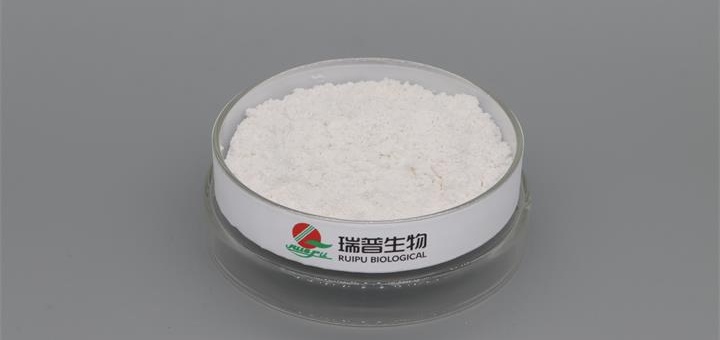
Calcium gluconate exhibits significant differences in stability under extreme environments. The core rule is that it is sensitive to high temperatures and strong acidity/alkalinity (prone to decomposition or precipitation) but relatively stable to low temperatures, high humidity, and high salt. These characteristics are determined by its organic carboxylate structure and directly influence its applicability in extreme application scenarios (e.g., high-temperature processed foods, high-salt condiments, low-temperature cold-chain formulations). Specific research conclusions are as follows:
I. Extreme High-Temperature Environment: Decomposition Above Melting Point, Stability at Medium-Low Temperatures
High temperature is a key extreme factor affecting calcium gluconate stability. Two scenarios—"medium-low temperature (<200°C)" and "high temperature (≥295°C, melting point)"—must be distinguished, as stability performance and decomposition behavior differ significantly.
(I) Medium-Low Temperature Environment (-20°C ~ 200°C): Stable Structure, No Significant Degradation
In medium-low temperature scenarios such as food processing (e.g., pasteurization, spray drying) and pharmaceutical formulation (e.g., low-temperature drying), calcium gluconate exhibits good stability:
Temperature range and stability performance:
Low temperature (-20°C ~ 0°C, e.g., frozen foods, cold-chain formulations): The crystalline form of calcium gluconate remains stable without deliquescence or caking. Although solubility slightly decreases (from 2.16 g/100 mL at 25°C to 1.2 g/100 mL at 0°C), the molecular structure remains unchanged after dissolution, and normal solubility can be restored upon rewarming.
Room temperature to medium-high temperature (25°C ~ 200°C, e.g., baking preheating, oral solution sterilization): Thermogravimetric analysis (TGA) and differential scanning calorimetry (DSC) show that calcium gluconate has a mass loss rate of <1% in this temperature range (mainly surface-adsorbed water), with no decomposition products (e.g., ammonia, carbon dioxide) generated. The gluconate groups and calcium ions in the molecule are stably bound, and it can withstand 121°C high-pressure sterilization (a common process for pharmaceutical injections) for 30 minutes, with post-sterilization purity still ≥99%.
Application verification: Adding 1% calcium gluconate to biscuits baked at 80°C, the content loss rate after cooling is only 2.3%—lower than calcium carbonate (5.8%) but higher than calcium phosphate (0.5%), confirming its stable retention in medium-low temperature processing.
(II) High-Temperature Environment (≥295°C, Exceeding Melting Point): Violent Decomposition, Producing Small-Molecule Substances
When the temperature exceeds the melting point of calcium gluconate (293–295°C), its molecular structure undergoes irreversible damage. The specific decomposition process and products are as follows:
Decomposition stages and products:
First stage (295°C ~ 350°C): The coordination bond between the carboxyl group (-COOH) and calcium ion in the molecule breaks, releasing gluconic acid (C₆H₁₂O₇). Gluconic acid further dehydrates to form gluconolactone (C₆H₁₀O₆), with a mass loss of approximately 30% (mainly water molecules and lactonization products).
Second stage (350°C ~ 500°C): Gluconolactone undergoes carbon chain cleavage, generating small-molecule compounds such as carbon dioxide (CO₂), acetic acid (CH₃COOH), and acetone (CH₃COCH₃). Meanwhile, calcium ions combine with residual carbon to form calcium carbonate (CaCO₃), with a cumulative mass loss of 60%.
Third stage (>500°C): Calcium carbonate decomposes into calcium oxide (CaO) and carbon dioxide, leaving calcium oxide as the final solid residue (accounting for 15%–20% of the initial mass).
Risk warning: Although high-temperature decomposition products are non-toxic, they cause calcium gluconate to lose its calcium-supplementing and functional properties. Therefore, it should not be used in extreme high-temperature scenarios such as high-temperature baking (e.g., pizza crusts with oven temperatures >300°C) or flame heating.
II. Extreme Acidic/Alkaline Environments: Stable in Strong Acidity, Prone to Precipitation in Strong Alkalinity
The stability of calcium gluconate is highly sensitive to pH. It behaves significantly differently in extremely acidic (pH < 2) and extremely alkaline (pH > 10) environments, with core influencing factors being the dissociation equilibrium of gluconate groups and the precipitation reaction of calcium ions.
(I) Extreme Acidic Environment (pH < 2, e.g., Concentrated Hydrochloric Acid, High-Acidity Fruit Juices): Enhanced Solubility, Stable Structure
In strongly acidic conditions, calcium gluconate not only does not decompose but also has increased solubility due to the action of hydrogen ions (H⁺), with an intact molecular structure:
Stability mechanism: In a strongly acidic environment, H⁺ combines with gluconate ions (C₆H₁₁O₇⁻) to form gluconic acid (a weak electrolyte), disrupting the dissolution equilibrium of calcium gluconate (Ca(C₆H₁₁O₇)₂ ⇌ Ca²⁺ + 2C₆H₁₁O₇⁻) and promoting continuous dissolution. Solubility increases significantly with decreasing pH—reaching 25 g/100 mL at pH = 1 (25°C), 11 times higher than in neutral conditions.
Structural stability verification: Soaking calcium gluconate in hydrochloric acid solution (pH = 1) for 72 hours, high-performance liquid chromatography (HPLC) detection shows no decomposition products of gluconate groups (e.g., glucose, oxalic acid) and no decrease in calcium ion concentration, confirming its stable molecular structure and no degradation risk in strongly acidic environments.
Application scenarios: Suitable for calcium fortification of high-acidity foods (e.g., lemon juice with pH = 2.5, fermented sauerkraut with pH = 1.8). Adding 1.5% calcium gluconate ensures complete dissolution without precipitation or impact on food flavor.
(II) Extreme Alkaline Environment (pH > 10, e.g., Concentrated Sodium Hydroxide, High-Alkaline Detergents): Prone to Precipitation, No Decomposition
In strongly alkaline conditions, calcium gluconate does not undergo molecular decomposition, but calcium ions combine with hydroxide ions (OH⁻) to form slightly soluble calcium hydroxide (Ca(OH)₂), causing precipitation in the system. Specific performance is as follows:
Precipitation rule: At 25°C, when the solution pH > 10 and calcium ion concentration exceeds 0.15 g/100 mL (calcium gluconate addition > 1.5%), white calcium hydroxide precipitation occurs. The amount of precipitation increases with rising pH and increasing calcium gluconate concentration—at pH = 12, the precipitation rate in 1% calcium gluconate solution reaches 85%, with only 0.15% calcium ions remaining in the solution.
Precipitation characteristics: The generated calcium hydroxide precipitate is non-toxic. If the solution pH is adjusted back to 7.0, the precipitate can redissolve (calcium hydroxide solubility in neutral water is 0.165 g/100 mL), restoring calcium gluconate to its dissolved state. This confirms the process is reversible physical precipitation rather than chemical decomposition.
Risk avoidance: Calcium gluconate should not be used in strongly alkaline products (e.g., alkaline detergents with pH = 11, industrial desulfurizers with pH = 13). For food applications, the system pH should be controlled below 8.0 (e.g., alkaline steamed bun dough with pH = 7.5–8.0) and addition amount < 1% to prevent precipitation from affecting product taste and appearance.
III. Extreme High-Humidity Environment (Relative Humidity RH > 85%): Weak Hygroscopicity, No Deliquescence or Deterioration
High-humidity environments easily cause deliquescence and caking of salts, affecting their storage and use. Due to the hydrophobic groups (isobutyl) in the gluconate group of its molecular structure, calcium gluconate has weak hygroscopicity and exhibits good stability in high-humidity environments.
(I) Hygroscopicity Rule
Tests using a dynamic vapor sorption (DVS) analyzer show the following hygroscopicity data for calcium gluconate at 25°C:
RH 60% (conventional environment): Water absorption < 1% after 72 hours, no caking.
RH 85% (high-humidity environment, e.g., plum rain season in southern China): Water absorption 2.5%–3.0% after 72 hours, slight surface moistening of particles but no deliquescence (no liquid water precipitation), remaining loose.
RH 95% (extreme high humidity, e.g., humid warehouses): Water absorption 5.0%–5.5% after 72 hours, slight caking of particles. However, the caking is easily crushed (crushable with pressure < 5N), and solubility remains unchanged (purity ≥ 99%)—far better than calcium chloride (water absorption > 30% after 72 hours at RH 85%, complete deliquescence) and calcium carbonate (water absorption < 0.5%, but prone to caking due to humidity fluctuations).
(II) Storage Recommendations
For storing calcium gluconate in high-humidity environments, it should be packaged in polyethylene sealed bags (thickness ≥ 0.1 mm) with built-in silica gel desiccants (addition amount 5 g/kg product). This controls water absorption within 2% and enables a storage period of over 6 months without deterioration.
IV. Extreme High-Salt Environment (Salt Concentration > 10%, e.g., High-Salt Condiments, Seawater): Stable Dissolution, No Complexation Reaction
In high-salt environments, large amounts of sodium ions (Na⁺) and chloride ions (Cl⁻) may complex with calcium ions or compete for dissolution, affecting the stability of calcium gluconate. However, practical research shows it behaves stably in high-salt environments:
(I) Dissolution and Stability Performance
At 25°C, the solubility of calcium gluconate in 10% sodium chloride (NaCl, simulating soy sauce, pickles) and 15% potassium chloride (KCl, low-sodium salt) solutions is 2.0 g/100 mL and 1.9 g/100 mL, respectively—only 7%–8% lower than in pure water (2.16 g/100 mL) with no precipitation. Ion chromatography (IC) detection shows the concentration ratio of gluconate ions to calcium ions in the solution is 2:1 (theoretical ratio), with no complex ions (e.g., CaCl⁺, CaNa⁺) generated, confirming that high-salt ions do not disrupt the dissociation equilibrium of calcium gluconate.
(II) Application Verification
Adding 1% calcium gluconate to soy sauce with 12% salt content, storing at room temperature for 30 days, the content loss rate is only 1.2%. The soy sauce remains clear without precipitation, and its flavor is unchanged (sensory evaluation and gas chromatography-mass spectrometry (GC-MS) detection show no new flavor substances). This confirms its applicability for calcium fortification of high-salt condiments.
The stability of calcium gluconate under extreme environments can be summarized as "three stabilities and one sensitivity": stable to medium-low temperatures, high humidity, and high salt; sensitive to high temperatures (>295°C) and strong alkalinity (pH > 10). In specific applications, risks should be avoided based on the type of extreme environment—controlling temperature < 200°C in high-temperature scenarios and pH < 8.0 in alkaline scenarios. Meanwhile, its solubility advantage in strong acidity can be leveraged to expand applications in high-acidity foods; no special protection is required for high-humidity, high-salt, or low-temperature scenarios, and it can be used directly. These research conclusions provide key data support for the application of calcium gluconate under extreme conditions (e.g., high-temperature processed foods, high-salt condiments, cold-chain formulations).