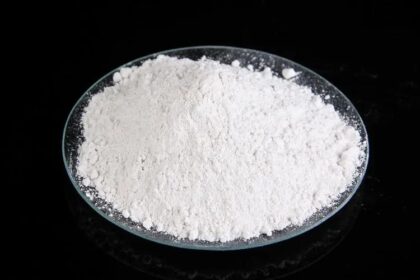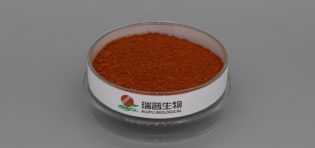
The modern consumer market is increasingly demanding fortified products, driving food and beverage manufacturers to seek high-quality nutrient raw materials that do not compromise taste or texture. Iron fortification is particularly challenging, and Ferric Phosphate is often selected for its relatively neutral flavor profile and high stability compared to other iron salts. However, selecting the right functional ingredients is only the first step, as integrating them into complex matrices requires precise technical execution. As an R&D formulator working closely with health supplement raw materials and beverage ingredients, I recently embarked on a project to develop a highly stable, iron-fortified clear beverage, assuming the process would be straightforward based on initial theoretical models.
That assumption quickly led to a frustrating reality where I spent two months failing six consecutive Ferric Phosphate batches during our pilot trials. The core issues revolved around physical stability and unexpected chemical interactions within the liquid matrix. In the first two batches, we encountered severe sedimentation, where the iron particles settled at the bottom of the clear beverage within just forty-eight hours, completely ruining the visual appeal. Batches three and four attempted to fix this by increasing the viscosity, but this resulted in an unpalatable, syrupy mouthfeel that consumers would instantly reject. The fifth batch introduced a different problem entirely, as the unencapsulated iron catalyzed the oxidation of added Vitamin C, leading to a noticeable color shift and a degraded nutritional profile over a standard shelf-life testing period. The sixth batch suffered from a slight metallic off-taste that only became apparent after two weeks of accelerated aging, proving that initial sensory evaluations are often insufficient for long-term product viability.
To overcome these persistent hurdles, we had to fundamentally rethink our approach to particle mechanics and matrix interactions, ultimately developing specialized application solutions tailored for liquid systems. The breakthrough came when we transitioned to a micronized, encapsulated form of Ferric Phosphate, which drastically reduced the particle size to under five microns while shielding the iron core with a lipid-based coating. This specific modification prevented the iron from interacting directly with the aqueous phase and the sensitive ascorbic acid, effectively halting the oxidation issue seen in batch five. Furthermore, we introduced a tailored hydrocolloid stabilization system that created a weak gel network at rest, keeping the micronized particles uniformly suspended without altering the light, refreshing mouthfeel of the beverage. We also adjusted the processing parameters, specifically utilizing high-shear homogenization at a controlled temperature of sixty degrees Celsius, which ensured the encapsulated particles were evenly dispersed without breaking their protective coating.
| Trial Phase | Formulation Approach | Primary Failure Mode | Impact on Product |
|---|---|---|---|
| Batches 1-2 | Standard Ferric Phosphate | Severe Sedimentation | Particles settled within 48 hours |
| Batches 3-4 | Increased Viscosity | Syrupy Mouthfeel | Unpalatable and heavy texture |
| Batch 5 | Unencapsulated Iron | Vitamin C Oxidation | Noticeable color shift and nutrient loss |
| Batch 6 | Standard Aging Test | Metallic Off-Taste | Delayed sensory degradation after 2 weeks |
| Final Solution | Encapsulated and Micronized | Successful Suspension | Stable, neutral taste, and clear appearance |
The rigorous troubleshooting from those six failed batches ultimately translated into immense value for our B2B partners looking to incorporate these nutrient raw materials into their own product lines. By providing these optimized application solutions, we enable beverage manufacturers to confidently formulate clear or lightly colored drinks without fearing sedimentation or vitamin degradation. For clients utilizing health supplement raw materials in powdered or ready-to-drink protein shakes, the encapsulated Ferric Phosphate ensures that the final product maintains a clean label and a neutral taste profile, which is critical for consumer retention. The enhanced stability of these functional ingredients means that brands can guarantee their nutritional claims throughout the entire shelf life, avoiding costly recalls or reformulations down the line. This level of technical support is particularly crucial for brands expanding into international markets, where strict regulatory standards demand precise nutritional labeling and consistent product quality. Moreover, the technical data and processing guidelines we now provide alongside our beverage ingredients allow manufacturing teams to scale up production smoothly, saving them the exact two months of trial and error that our R&D team endured.
Formulating with challenging minerals requires more than just sourcing standard nutrient raw materials; it demands a deep understanding of food chemistry and a willingness to iterate through failures to find the optimal technical pathway. The journey of failing six batches of Ferric Phosphate taught us that true expertise in functional ingredients lies in the nuanced application solutions we provide to our clients. By sharing these hard-earned technical insights and offering fully optimized, stable ingredients, we empower the food, beverage, and supplement industries to innovate confidently. As consumer expectations for functional foods continue to evolve, the ability to seamlessly integrate essential minerals into everyday consumables will remain a key differentiator for forward-thinking brands. Ultimately, a reliable manufacturing partner does not just supply raw powders, but delivers the proven technical frameworks necessary to turn complex nutritional concepts into successful, market-ready products.
Frequently Asked Questions (FAQ)
Why is Ferric Phosphate so difficult to work with in liquid beverages?
Working with iron fortification in clear or light-colored liquids is notoriously tricky because the mineral particles naturally want to sink to the bottom or react with other sensitive ingredients like vitamin C. When we first started testing our initial batches, we quickly realized that standard Ferric Phosphate particles were simply too heavy and large to stay suspended without creating a thick, syrupy texture that consumers absolutely hate.
The real challenge comes from balancing physical stability with a pleasant mouthfeel, which means you cannot just dump more thickeners into the mix to keep the iron afloat. We had to explore specialized micronization and encapsulation techniques to shrink the particle size down to between 3 and 5 microns while protecting the iron core from triggering oxidation in the surrounding liquid matrix.
What exactly went wrong during those first six failed batches?
The first couple of attempts resulted in severe sedimentation where the iron settled at the bottom of the bottle within just 48 hours, completely ruining the visual appeal of the clear beverage. We then tried adjusting the viscosity for batches three and four, but that led to an unpalatable, heavy mouthfeel that would instantly turn off anyone trying to enjoy a refreshing drink.
Things got even more complicated with the fifth and sixth batches when we encountered unexpected chemical interactions and delayed sensory issues. The unencapsulated iron catalyzed the oxidation of added ascorbic acid, causing a noticeable color shift, while another batch developed a slight metallic off-taste that only revealed itself after 2 weeks of accelerated aging tests.
How did encapsulation solve the stability and taste issues?
Applying a specialized lipid-based coating around the micronized Ferric Phosphate particles created a physical barrier that stopped the iron from directly interacting with the aqueous phase and sensitive vitamins. This encapsulation effectively halted the oxidation process we saw in our earlier trials, ensuring that the nutritional profile and the bright color of the beverage remained completely intact throughout its entire shelf life.
Beyond just protecting the nutrients, this microscopic shield also prevented the iron from releasing those harsh metallic ions that cause unpleasant off-tastes in liquid formulations. By combining this encapsulated ingredient with a tailored hydrocolloid stabilization system and precise high-shear homogenization, we finally achieved a perfectly smooth, stable beverage that tastes exactly as intended without any gritty or metallic aftertaste.
Can these application solutions be scaled up for commercial beverage production?
Scaling up from a pilot lab to full commercial production is always a major hurdle, but the processing parameters we developed are specifically designed to be replicated on standard manufacturing lines. We utilize controlled high-shear homogenization at between 55 and 65 degrees Celsius, which is a standard capability for most modern beverage processing facilities looking to integrate these advanced nutrient raw materials.
Providing these detailed technical guidelines means that manufacturing teams can confidently transition from small test runs to massive commercial batches without having to endure the same 2 months of trial and error that our R&D team experienced. This reliable scalability ensures that brands can maintain consistent product quality, meet strict regulatory nutritional claims, and get their fortified beverages to market much faster.