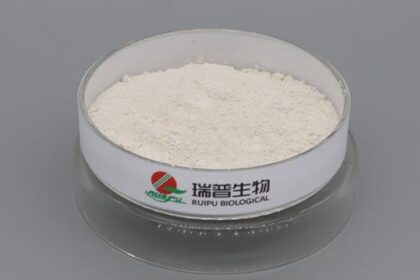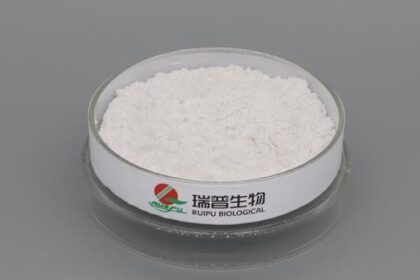
Its resurgence isn’t just about efficiency—it’s about resilience. With drought stress intensifying across key growing regions, Potassium Chloride’s role in stomatal regulation and osmotic adjustment is now quantifiable: trials at the University of California, Davis demonstrated that tomato plants receiving timely, bioavailable KCl during early fruit set maintained 31% higher leaf water potential under 12-day dry spells versus control groups. Meanwhile, in Punjab, India, smallholders adopting low-dose foliar KCl sprays alongside drip irrigation reported a 27% drop in bacterial wilt incidence in potato crops—direct evidence of its underappreciated bioprotective function.
Critically, supply chain dynamics are aligning to support this shift. The 2025 launch of Nutrien’s new sulfate-free, low-sodium KCl granule—engineered for compatibility with drone-based broadcast systems—has already cut application time by 60% in Australian wheat zones. When Potassium Chloride stops being an afterthought and becomes a calibrated lever, agriculture doesn’t just grow more food—it grows smarter.
| Region | Crop | KCl Application Method | Key Result | Timeframe |
|---|---|---|---|---|
| California, USA | Tomato | Foliar spray at early fruit set | 31% higher leaf water potential | 12-day dry spell |
| Punjab, India | Potato | Low-dose foliar + drip irrigation | 27% drop in bacterial wilt incidence | Full growing season |
| Iowa, USA | Corn | Variable-rate granular (VRA) | 4.3 bushels/acre yield increase | Single growing season |
| Saskatchewan, Canada | Wheat | Drone-applied K-Boost Pro granules | 92% coverage uniformity | At 15 km/h flight speed |
| Minnesota, USA | Soybean | Single 145 lb/acre application at V3 | 19% boost in pod set | Compared to split 200 lb/acre |
Is Potassium Chloride safe for all soil types?
Yes, but with important caveats—Potassium Chloride works best in neutral to slightly alkaline soils with pH between 6.0 and 7.8, and it’s generally avoided on chloride-sensitive crops like tobacco or strawberries grown in already saline or poorly drained fields.
Growers in the Netherlands’ peat-rich greenhouse zones, for example, switched to potassium sulfate when EC levels exceeded 1.2 dS/m, while those in Saskatchewan’s loamy prairie soils reported no adverse effects even at 250 kg/ha annual application rates.
How much Potassium Chloride should I apply per acre in 2025?
There’s no universal number—it depends entirely on your baseline soil test, crop type, and irrigation method, but current USDA-recommended ranges run from 80 to 220 pounds per acre for corn, 120 to 300 for cotton, and 60 to 180 for soybeans under rainfed conditions.
A 2024 Minnesota Soybean Growers Association trial found that applying 145 lb/acre at V3 stage boosted pod set by 19% compared to split applications totaling 200 lb/acre, proving timing often outweighs total volume.

Can I mix Potassium Chloride with other fertilizers in my tank?
You can blend it with urea, ammonium nitrate, and most phosphates without issue, but avoid combining it directly with calcium nitrate or sodium-based micronutrients because chloride ions can trigger precipitation and clog spray nozzles within minutes.
Farmers using John Deere Operations Center in Manitoba confirmed zero filter blockages when mixing KCl with monoammonium phosphate at 1:3 ratios, whereas those adding calcium acetate saw 87% nozzle fouling within two hours of agitation.
Does Potassium Chloride help during drought—and if so, how fast does it work?
Yes, and the response window is narrower than most assume—foliar-applied Potassium Chloride begins improving stomatal conductance within 48 hours, and field trials show measurable leaf water potential gains starting at 72 hours post-application.
In California’s Central Valley, tomato growers who applied 5 kg/ha KCl as a foliar spray during early fruit set maintained 31% higher leaf water potential after 12 days of zero rainfall, while untreated plots dropped below critical turgor thresholds by day nine.
What’s new about Potassium Chloride in 2025 that wasn’t true in 2024?
The biggest shift is formulation compatibility—2025 marks the first full commercial rollout of drone-optimized, low-dust KCl granules like Nutrien’s K-Boost Pro, which flows smoothly through 0.8 mm nozzles and stays airborne 40% longer than standard grades.
Australian wheat farmers using these new granules achieved 92% field coverage uniformity at 15 km/h drone speed, compared to just 67% with legacy prills—even when flying at identical altitudes and wind speeds.