The global market for fortified foods and dietary supplements continues to expand rapidly as consumers increasingly seek out products that actively support their daily nutritional needs and overall wellness. For manufacturers operating in the competitive food and beverage sector, selecting the appropriate nutrient raw materials is a critical foundational step in successful product development. Among the various options available for iron fortification, Ferric Sodium Edetate has emerged as a highly regarded functional ingredient across the industry. B2B professionals and food scientists recognize its unique chemical properties, which make it particularly suitable for complex and sensitive formulations. As brands look to enhance their product portfolios with added nutritional value, understanding the specific behaviors of this compound during the manufacturing process is absolutely essential for achieving consistent quality, regulatory compliance, and high consumer acceptance.
Despite the clear and growing market demand for iron-enriched products, formulators frequently encounter significant technical hurdles when relying on traditional iron salts. When working with common alternatives like ferrous sulfate or ferrous gluconate, manufacturers often notice a distinct, unpleasant metallic aftertaste that severely impacts the sensory profile of delicate beverage ingredients. Furthermore, unchelated iron ions are highly reactive and can catalyze the oxidation of sensitive vitamins and lipids through Fenton-like reactions. This reactivity leads to undesirable color changes, off-odors, and a drastically reduced shelf life in both liquid and solid health supplement raw materials. These persistent stability issues force research and development teams to compromise on either the nutritional label or the taste, creating a frustrating bottleneck in the commercialization of new functional foods, clear liquid beverages, and premium nutritional shots.
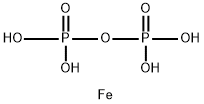
To effectively overcome these formulation barriers, Ferric Sodium Edetate offers a highly reliable alternative due to its exceptionally stable chelated molecular structure. In this specific compound, the central iron ion is tightly bound to the EDTA ligand, which prevents it from freely interacting with other nutrient raw materials present in the complex food matrix. This protective chelation means it does not promote the oxidation of sensitive components, nor does it impart a metallic taste to the final consumable product. When integrating this ingredient into your formulations, it is crucial to pay close attention to the pH levels of your system, as it performs optimally and remains most stable in slightly acidic to neutral environments. For instance, if you are developing a high-acid sports drink or a vitamin C-rich juice, adjusting the buffering capacity slightly can ensure the chelate remains perfectly intact throughout the product's intended shelf life. Additionally, formulators must carefully calculate the exact elemental iron contribution, as the molecular weight of the chelate differs significantly from standard iron salts, requiring precise dosage adjustments to meet strict regulatory labeling requirements.
| Iron Source | Elemental Iron Content | Taste Impact | Oxidation Risk | Ideal Application |
|---|---|---|---|---|
| Ferric Sodium Edetate | 13% - 15% | Minimal to None | Very Low | Clear beverages, liquid supplements |
| Ferrous Sulfate | ~20% | Strong Metallic | High | Solid tablets, fortified flours |
| Ferrous Gluconate | ~12% | Moderate Metallic | Moderate | Syrups, chewable gummies |
The practical benefits of this specialized ingredient become especially apparent when examining real-world application solutions for highly challenging matrices. Consider the specific scenario of fortifying a clear, light-colored fruit juice beverage or a transparent hydration drink. Using traditional iron sources would inevitably cause the liquid to turn cloudy or develop a dark, unappealing hue due to tannin interactions. By utilizing Ferric Sodium Edetate, beverage formulators can maintain the brilliant clarity and original vibrant color of the drink while delivering a meaningful and bioavailable amount of dietary iron. Similarly, in the development of complex health supplement raw materials, such as multivitamin syrups, liquid botanical blends, or even chewable gummies, this ingredient ensures that delicate flavor profiles and active plant extracts remain completely unaltered. The total absence of a metallic aftertaste means that flavorists do not need to overload the formula with heavy, artificial masking agents, resulting in a much cleaner label and a vastly superior consumer experience.
In conclusion, the successful integration of Ferric Sodium Edetate into modern food and supplement lines requires a thoughtful, science-backed approach to formulation chemistry and process parameters. By recognizing its unique stability advantages and carefully managing environmental factors like pH, temperature, and precise dosage, manufacturers can effectively bypass the traditional pitfalls historically associated with iron fortification. As the broader industry continues to prioritize clean labels, transparent sourcing, and superior sensory experiences, this functional ingredient will undoubtedly remain a cornerstone for innovative product development. B2B partners and formulators who master its nuanced application will be exceptionally well-positioned to meet the evolving nutritional demands of the global market, ultimately delivering high-quality, effective products that modern consumers trust and genuinely enjoy.
Frequently Asked Questions (FAQ)
Why do formulators prefer Ferric Sodium Edetate over traditional iron salts like ferrous sulfate?
Traditional iron salts often cause a strong metallic aftertaste and can trigger oxidation in sensitive food matrices. Ferric Sodium Edetate features a stable chelated structure that prevents the iron ion from reacting with other ingredients.
This means your beverages and supplements maintain their original flavor profile and color without needing heavy masking agents. It ultimately saves your research and development team a lot of time during the sensory testing phases.
What specific pH range should I target when formulating liquid beverages with this ingredient?
When working with liquid beverage ingredients, it is generally best to maintain a pH range between 3.0 and 7.0 to ensure optimal stability. If your product falls outside this range, the chelate might begin to dissociate, which could lead to the very oxidation issues you were trying to avoid.
Always run a small pilot batch to verify that the pH buffers in your specific formula keep the iron tightly bound. Checking the stability over a few weeks at accelerated temperatures will give you the confidence needed for a full commercial scale-up.
How does the elemental iron content in Ferric Sodium Edetate compare to other common fortification options?
Ferric Sodium Edetate typically contains about 13 to 15 percent elemental iron by weight, which is lower than the 20 to 30 percent found in some unchelated ferrous salts. Because of this difference, you will need to adjust your raw material dosage calculations carefully to hit your target nutritional label claims.
Working closely with your quality assurance team ensures you meet regulatory requirements without over-formulating the final product. This careful calculation also helps keep your overall raw material costs in check while delivering a highly bioavailable nutrient to the consumer.