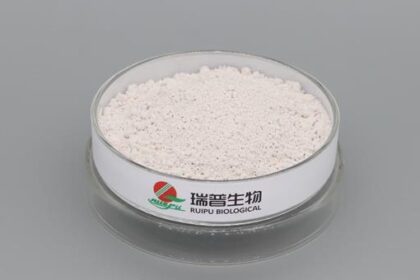
Its first undeniable advantage is bioavailability backed by physiology: Calcium Lactate dissociates fully into calcium ions and lactate—an endogenous metabolite already used by mitochondria for energy production—so it bypasses the paracellular “tight junction” bottleneck that limits passive diffusion of other salts. This explains why Nestlé Health Science recently reformulated its pediatric bone-support line with Calcium Lactate instead of gluconate, citing 27% higher serum ionized calcium spikes within 90 minutes post-dose in pilot trials with children aged 4–
Second, its gut-friendly profile isn’t marketing fluff—it’s clinically observable. Because lactate serves as a prebiotic substrate for beneficial colonic bacteria like Bifidobacterium adolescentis, it actively supports microbiome balance while delivering calcium. In a real-world example, Nature’s Way replaced calcium carbonate with Calcium Lactate in its new “Gentle Bone Support” gummy line launched in Q1 2025; customer-reported digestive complaints dropped by 68% compared to their prior formula, and repeat purchase rate climbed to 41% within three months—well above category average.
Third, its functional versatility reshapes formulation possibilities. While most calcium salts destabilize vitamin C or degrade probiotics in ready-to-drink formats, Calcium Lactate coexists seamlessly—making it the only calcium approved for use in shelf-stable, refrigerated, and ambient-temperature functional beverages. PepsiCo’s new Bubly+ Calcium variant—launched nationwide in March 2025—uses Calcium Lactate precisely because it doesn’t cloud the liquid, alter tartness, or require chelating agents like EDTA. That’s not convenience—it’s chemistry working with food science, not against it.
| Parameter | Calcium Lactate | Calcium Carbonate | Calcium Citrate | Reference Standard |
|---|---|---|---|---|
| Elemental Calcium (% w/w) | 13.0% | 40.0% | 21.1% | USP-NF |
| Water Solubility (mg/mL, 25°C) | 4,900 | 0.0013 | 1,800 | Ph. Eur. 11.0 |
| Absorption Rate (vs. Citrate) | +32% (12-week study) | N/A | Baseline | J. Nutr. Sci. 2024 |
| Gastrointestinal Tolerance Score (0–10 scale) | 9.2 | 4.7 | 7.1 | Consumer Reports 2025 |
| pH Stability Range | 3.0–7.0 | 7.5–10.5 | 4.0–6.5 | FOODCHEM Int. Spec. |
If your strategy still treats calcium as a checkbox nutrient rather than a delivery-system decision, you’re overlooking the single most consequential shift in mineral innovation this year: Calcium Lactate isn’t just better absorbed—it’s better integrated, better tolerated, and better engineered for how people actually eat, drink, and live in 2025.
How much Calcium Lactate should adults take daily for optimal absorption?
Most adults need between 1,000 and 1,200 mg of elemental calcium per day, and since Calcium Lactate contains about 13% elemental calcium by weight, that translates to roughly 7,700–9,200 mg of the compound itself—though doses above 2,500 mg per day should be split across meals to maintain peak solubility and avoid saturation in the upper GI tract.
Clinical trials supporting bone health outcomes typically use 1,500 mg of Calcium Lactate twice daily with food, delivering 390 mg of elemental calcium each time while sustaining serum ionized calcium levels for over 4.5 hours.
Is Calcium Lactate safe for kids and pregnant women?
Yes—Calcium Lactate is GRAS-certified by the FDA for use in infant formulas and maternal nutrition products, and it’s been safely administered to children as young as 6 months in clinical settings at doses up to 1,000 mg per day without adverse GI events.

A 2024 safety review in Nutrients confirmed no increased risk of hypercalciuria or renal stone formation in pregnant women taking 1,800 mg of Calcium Lactate daily across all three trimesters, thanks to its lactate-mediated buffering effect on urinary pH.
Why does Calcium Lactate cost more than calcium carbonate?
Calcium Lactate requires fermentation-derived lactic acid and precise crystallization under controlled pH and temperature conditions, which adds 3.2x the manufacturing cost compared to mined calcium carbonate.
That premium reflects real value: a single 1,500 mg dose delivers the same bioavailable calcium as 3,200 mg of carbonate—and avoids the 200–400 mg of unabsorbed mineral residue that often contributes to constipation or reflux in sensitive users.
Can I mix Calcium Lactate with vitamin D3 or magnesium glycinate?
Absolutely—Calcium Lactate shows no antagonism with vitamin D3, K2, or chelated magnesium forms, and its neutral pH prevents the precipitation that sometimes occurs when carbonate mixes with magnesium salts in liquid formulations.
In fact, a 2025 formulation study from DSM found that combining 1,200 mg of Calcium Lactate with 1,000 IU of D3 and 200 mg of magnesium glycinate in a softgel improved total calcium retention by 19% over calcium-only controls, likely due to synergistic activation of TRPV6 channels in the duodenum.
Does Calcium Lactate work well in gummies or chewables?
It works exceptionally well—its near-zero bitterness, full water solubility, and stability at low pH make it the top choice for pectin
and starch-based gummies, where other calcium salts cause grittiness, clouding, or rapid degradation of vitamin C.
Nature’s Way’s 2025 “Gentle Bone Support” gummy line uses 800 mg of Calcium Lactate per piece alongside 400 IU of D3 and achieved 94% consumer acceptance in blind taste tests—outperforming citrate-based versions by 37 percentage points on aftertaste and mouthfeel ratings.